HDA.V: $1.30

Overview

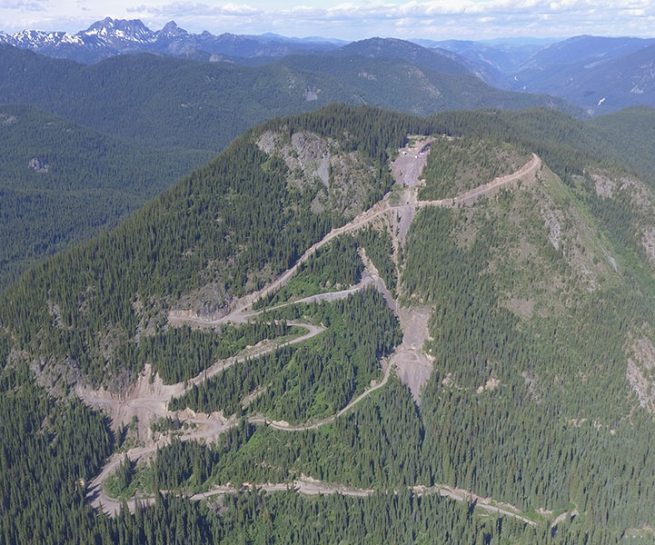
The Treasure Mountain Project is 29 Kilometres northeast of Hope, BC. or a 3 hour drive from Vancouver, BC.  View Map

The historic Treasure Mountain Property is 100% owned by Huldra Silver Inc. and the claim holdings consist of 51 mineral tenures comprising 21 legacy claims, 100 cell units and one Crown Grant for a total of approximately 2,850 hectares (7,000 acres). View Map

On July 15, 2009, the Company received a technical report titled “Technical Report, Resource Estimation, Mining and Reclamation Plan and Economic Evaluation, Treasure Mountain Mine, Tulameen River Area, British Columbia” dated June 15, 2009, revised July 2, 2009, prepared by independent consultants and Qualified Persons, Erik Ostensoe, P. Geo., G. H. Giroux, P. Eng. and A. J. Beaton, P. Eng. (Mining).  This report includes a disclosure of Resources and a current Resource Estimation and Economic Evaluation but is neither a pre-feasibility study nor a feasibility study. View Report

The Treasure Mountain property has been explored by Huldra Silver Inc. since 1980 and comprises more than 2700 metres of underground workings on four levels with six raises. A Resource Estimation by Giroux Consultants Ltd. dated May 29, 2009, was based on a 2007 program of underground chip sampling of parts of Level 1 and Level 2, combined with historic sample data from a development program in 1987 – 1989. Resources were estimated at cut-off grades from 1.0 to 45.0 ounces silver per ton. A Total Vein Indicated Resource, estimated at an 11.02 ounces silver per tonne (10.0 oz silver per ton) cut-off grade, was reported as 33,000 tonnes with 26.68 ounces silver per tonne, 4.16% lead and 3.80% zinc, containing 880,000 ounces silver, 3,030,000 lbs. lead and 2,760,000 lbs. zinc.  Total vein Inferred Resources, estimated at the same cut-off grade (11.02 ounces silver per tonne) were reported as 120,000 tonnes with 29.76 ounces silver per tonne, 2.79% lead and 4.36% zinc, containing 3,580,000 ounces silver, 7,370,000 lbs. lead and 11,540,000 lbs. zinc. [Note that Inferred Resources are based on geological evidence, limited sampling and reasonably assumed, but not verified, geological and grade continuity, and must be excluded from estimates forming the basis of feasibility or other economic studies.]

The Total Vein Indicated and Inferred Resources are presented in the following tables:

Readers are cautioned that mineral resources, which are not mineral reserves, do not have demonstrated economic viability.  There is no assurance that the above stated resources can be upgraded to “Measured” and “Indicated” categories, nor that the resources can be extracted in their entirety or without excessive dilution.

The company is currently undergoing a strategic review with the objective of bringing the Treasure Mountain Project into production with a lower capital expenditure than previous studies. The objective is to develop a plan that includes direct shipping the ore offsite for processing. The outcome of this review is uncertain and is subject to economic viability, financing and permitting. Shareholders are cautioned that the Company recognizes added risks, uncertainties and increased potential for failure to proceed without completing a feasibility study, establishing mineral reserves (a higher category of confidence) or upgrading the current inferred mineral resources.

Exploration History

Since its incorporation in March 1980, the Company has been engaged in the exploration and development of its wholly owned group of mineral tenures located at Treasure Mountain in the Similkameen Mining Division, British Columbia.  After discovering a silver rich vein on the claims in 1985, and exposing this vein for a length of 250 meters and testing it by shallow drilling in the summer of 1986, the Company went public in 1987, attaining a listing on the TSX-V in August of that year.

Between 1987 and 1989 the Company explored the vein zone on four underground levels with 9,000 feet of crosscuts, drifts and raises, complemented by 5,500 feet of underground and 10,000 feet of surface drilling.  Preceding the underground work, a bulk sample of 407 tons of select high-grade material from the surface vein showings was shipped to Cominco and Asarco smelters for processing .The smelters paid a total of $344,265 for the shipments. For the 403 Tons that was shipped to the trail smelter Huldra was paid based on the shipment containing 96.55 OZ/T Silver, .017 OZ/T Gold, 31.3% Lead, and 6.9% Zinc.

Since 1989, work at the Treasure Mountain property has included four small drill programs, several geo chem soil surveys, a legal mineral tenure survey by McElhanney and various technical studies by AMEC Earth & Environmental, Entech Consultants and others with respect to environmental and operational issues of a conceptual 24,000 tonnes per year mine/gravity concentration operation.  In 2007, Erik Ostensoe, P.Geo., undertook a program of sampling to supplement historic, pre NI 43-101 data.

The Treasure Mountain silver-zinc-lead-copper deposit was discovered in 1892 and has been the site of several episodes of exploration by means of surface and underground workings. Two mills have been constructed on the property but at present there are no facilities.

Parts of the following section are based on detailed historical information contained in a 1987 report by J. J. McDougall & Associates and on a detailed and informative but less well documented anecdotal history by James Laird that was included in a popular “rock hound” magazine. Mineral deposits in and near Treasure Mountain were first recognized in 1892. A small number of galena veins were prospected in subsequent years, including the “Silver Chief”, “Mary E” and “Whynot #3” prospects, all of which later became part of the Treasure Mountain mine. The latter was incrementally developed in a series of initiatives that included drifting and raising on different parts of the mineralized system that included footwall and hanging wall strands. Several nearby prospects were investigated by trenching and short adits.

A milling operation at Treasure Mountain in the period 1930 through 1932 processed approximately 4,000 tons that yielded 39,558 oz. silver, 379,532 lb. lead and 88,455 lb. zinc, plus cadmium (source:McDougall 1987 report, quoting Turnbull, private report, 1948). References in historic documents to periodic small “ore” shipments cannot be verified.

Recent Updates

February 14, 2012
Huldra Silver Provides Additional Drill Results from the 2011 Exploration Program at Treasure Mountain That Includes 1,565 Grams Per Tonne Ag over 1.2 Metres in Hole TM11-36 (more...)

February 13, 2012
Huldra Silver Provides Bulk Sample Update for Treasure Mountain (more...)

February 3, 2012
Huldra Silver announces amendments to the terms of the Craigmont Acquisiton agreements (more...)